

Un'introduzione all'arabo marocchino
L'arabo marocchino, o darija, è la lingua della vita quotidiana in Marocco. Condivide le sue fondamenta con l'arabo, ma ha sviluppato vocabolario, suoni, strutture e ritmi propri, plasmati nel tempo dall'arabo classico, dall'amazigh, dal francese e da altre influenze linguistiche. È la lingua degli scambi di ogni giorno, dalla conversazione informale alla spesa, al lavoro e alla vita sociale.
L'arabo moderno standard e il darija hanno ruoli diversi. L'arabo moderno standard è la lingua della scrittura formale, dei media, dell'istruzione e della comunicazione pubblica. Il darija è prima di tutto parlato, ed è la lingua che sentirai negli scambi quotidiani in tutto il Marocco. Per chi vive, lavora o passa molto tempo in Marocco, imparare il darija apre un accesso diretto a questi scambi di ogni giorno.
Insegniamo il darija come lingua parlata, con la comunicazione al centro del corso. Gli studenti cominciano a parlare dalle prime lezioni, mentre grammatica e vocabolario vengono introdotti come strumenti per comunicare meglio. Più che studiare il darija come un sistema astratto, l'obiettivo è sviluppare le competenze linguistiche per usarlo con naturalezza nelle situazioni reali.
Come insegniamo il darija
Prima di tutto, parlare
Parli dalla prima settimana. Vocabolario e grammatica entrano attraverso l'uso, sempre al servizio della comunicazione reale.
Le due scritture
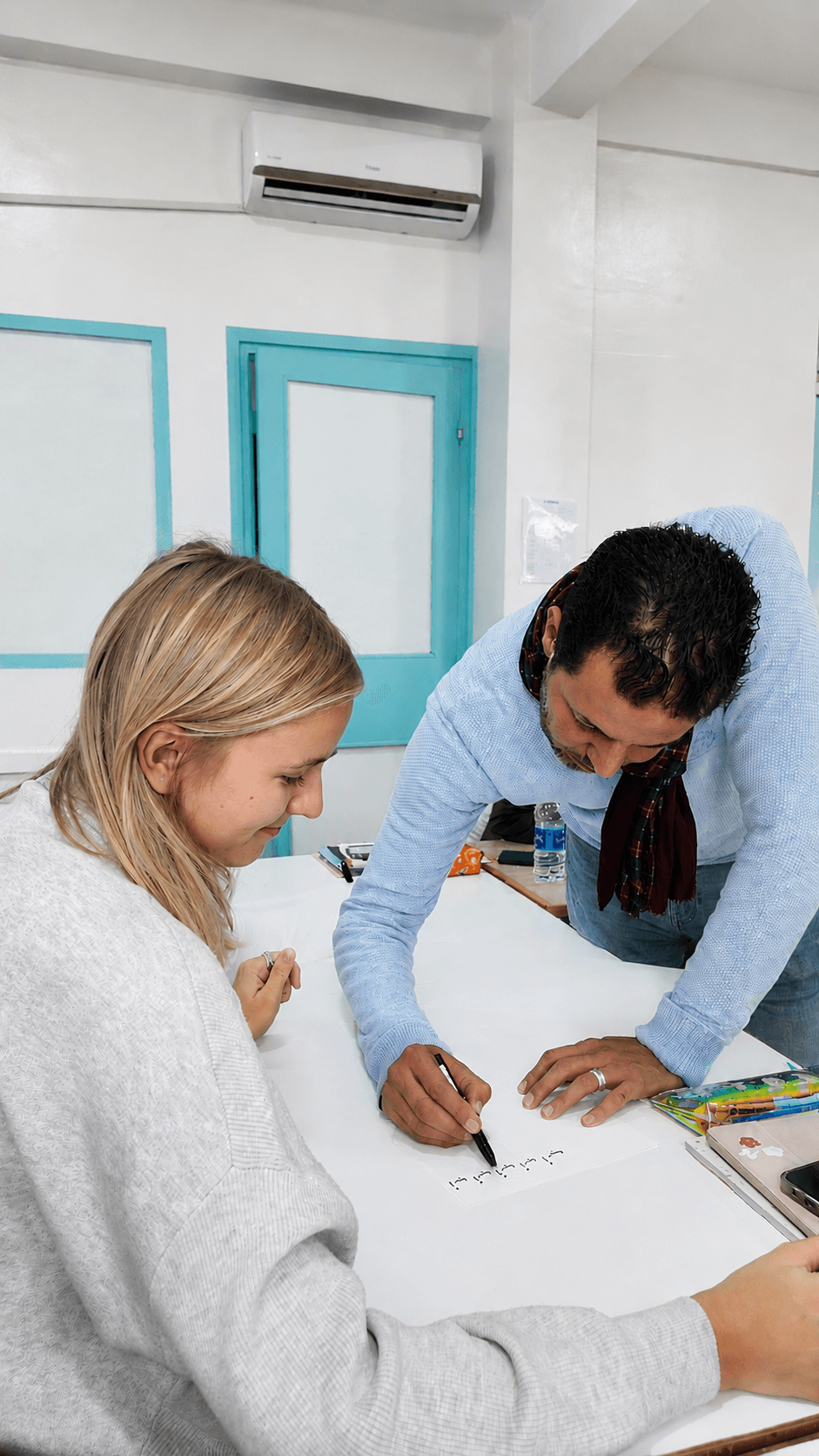
Insegniamo in scrittura araba accanto alla trascrizione latina, così parli da subito e ti impadronisci della scrittura al tuo ritmo.
Materiali autentici
Uniamo i materiali di arabo marocchino dei Peace Corps ai nostri: registrazioni reali e situazioni quotidiane, il darija com'è parlato davvero.
Insegnanti esperti
Madrelingua e insegnanti formati che insegnano anche nel nostro programma di MSA, e sanno guidarti tra il darija e l'arabo formale.
Dalle basi alla scioltezza
Il darija non ha un quadro ufficiale unico di competenza, quindi non riduciamo i progressi a un numero fisso di ore né a una scala inventata. Ogni livello si definisce invece per quello che riesci a capire e comunicare.
Principiante
Le basi della comunicazione quotidiana
Costruisci il vocabolario e le strutture essenziali per l'interazione di ogni giorno. Presentazioni, domande, richieste, numeri, ora, indicazioni, spesa, ordinazioni e altre situazioni comuni formano la base del corso. Fin dall'inizio lavori a capire e produrre un darija parlato semplice.
Intermedio
Costruire la conversazione
Vai oltre i piccoli scambi e cominci a comunicare con più autonomia. Parli di esperienze passate, progetti, opinioni e temi quotidiani. Capisci un parlato più naturale, rispondi senza appoggiarti a frasi preparate e sostieni conversazioni con sicurezza e precisione crescenti.
Avanzato
Sfumature, scioltezza e registri
Sviluppi la capacità di seguire e partecipare a conversazioni più complesse e spontanee. Lavori con il racconto, l'umorismo, l'argomentazione e i diversi registri del parlato. Impari ad adattare la lingua alle persone e alle situazioni, prendendo confidenza con le variazioni e i tratti regionali dell'arabo marocchino.
Il tuo livello di partenza si determina con una conversazione di livello, qualunque sia il corso che prenoti.
Chi impara il darija
Chi vive in Marocco
Per chi vive e lavora in Marocco, il darija è la lingua dell'interazione quotidiana. Non serve conoscere già la scrittura araba né avere basi di linguistica. Il corso parte dalla lingua che incontrerai più probabilmente nella vita di tutti i giorni e costruisce il vocabolario, le strutture e le espressioni che ti servono per comunicare con chi ti sta attorno.
Marocchini del mondo
Molti studenti di famiglia marocchina hanno già una certa familiarità con il darija. Magari capisci molto più di quanto riesci a dire, parli con disinvoltura ma inciampi in certe situazioni, o hai sviluppato il tuo darija soprattutto ascoltando a casa. Invece di metterti in un corso standard per principianti, valutiamo quello che capisci e produci davvero, e costruiamo da lì. Il corso si concentra sulle aree di cui hai più bisogno, senza tornare su quello che già sai.
Studenti di arabo moderno standard
Chi studia l'arabo moderno standard scopre spesso che l'arabo dei contesti formali è diverso dalla lingua della conversazione quotidiana. Aggiungere il darija ti dà l'occasione di sviluppare l'arabo marocchino parlato accanto agli studi di MSA, e di usare i due registri secondo il contesto.
شوية بشوية
Chwya b chwya · Piano piano
قطرة بقطرة كيحمل الواد: goccia a goccia si riempie il fiume. Raccogli una frase in una conversazione, un'espressione nuova dal tuo insegnante, una parola sentita per strada, e poco a poco questi pezzi cominciano a legarsi. Con il tempo, quello che all'inizio suonava estraneo diventa parte del tuo parlato di ogni giorno.
Il darija è più di una lingua pratica. Porta con sé i modi marocchini di parlare, scherzare, raccontare storie ed esprimere idee. Proverbi, espressioni, umorismo e la poesia dello zajal danno alla lingua un carattere che non si può separare dalla cultura in cui è parlata.
Imparare il darija, allora, non è solo farsi capire. È anche prendere confidenza con un altro modo di parlare e di vedere il mondo, chwya b chwya, un passo alla volta.
Test di livello, valutazione e certificato
Il livello si determina con una breve conversazione orale, online prima dell'arrivo o il primo giorno. Ci serve a capire cosa capisci e dici davvero in darija e a collocarti al livello giusto. Per chi ha il darija in famiglia, in particolare, questa conversazione permette di tenere conto di profili disomogenei e di conoscenze già acquisite.
La valutazione è continua e pratica. Lungo tutto il corso, gli insegnanti valutano quanto riesci a capire e comunicare al tuo livello, con una valutazione orale di fine corso invece di un esame scritto. Il darija è una lingua parlata, quindi la valutiamo parlando e ascoltando.
Ricevi un certificato che indica il corso seguito, le ore completate e il livello raggiunto. Se la tua università o istituzione richiede documenti specifici per i crediti accademici, scrivici e vediamo insieme cosa possiamo fornire.
I formati dei corsi
| Formato | Ore | Quando |
|---|---|---|
| Intensivo | 20 a settimana | Di mattina |
| Semi-intensivo | 10 a settimana | Di pomeriggio |
| Semi-privato (2–5) | A vostra scelta | A vostra scelta |
| Privato uno a uno | A tua scelta | A tua scelta |
| Corso serale | 30 ore in 10 settimane | Di sera |
| Online | Uno a uno | 9:00 – 18:00, ora del Marocco |
Trovi tutti i prezzi sulle pagine dei corsi di darija.
Il percorso combinato: MSA + darija
L'arabo moderno standard e il darija hanno ruoli diversi, ma impararli insieme ti permette di sviluppare in parallelo i due lati dell'arabo: la lingua formale della scrittura e dei contesti accademici, e la lingua parlata della vita quotidiana in Marocco.
Percorso combinato — 30 ore a settimana
Studi il MSA intensivo di mattina (20 ore) e il darija semi-intensivo di pomeriggio (10 ore). Ogni corso ha il suo test di livello e il suo livello, mentre i due orari sono coordinati in un unico programma. La parte di darija è un corso di lingua completo, con la sua progressione, i suoi materiali e la sua valutazione.
Il percorso combinato è disponibile per le stesse durate dei corsi individuali e il suo prezzo è la somma dei due programmi.
Per un carico più leggero, gli studenti di MSA possono anche aggiungere due pomeriggi di darija a settimana (4 ore), un'esposizione regolare all'arabo marocchino parlato accanto agli studi di MSA.
Scegli il tuo corso di darija
Prendi il formato che si accorda alla tua settimana; ogni corso insegna il darija per la conversazione, in scrittura araba e trascrizione latina.