

Beyond the classroom
Student Life
Accommodation
Your accommodation is arranged before arrival and confirmed before you book your flights.
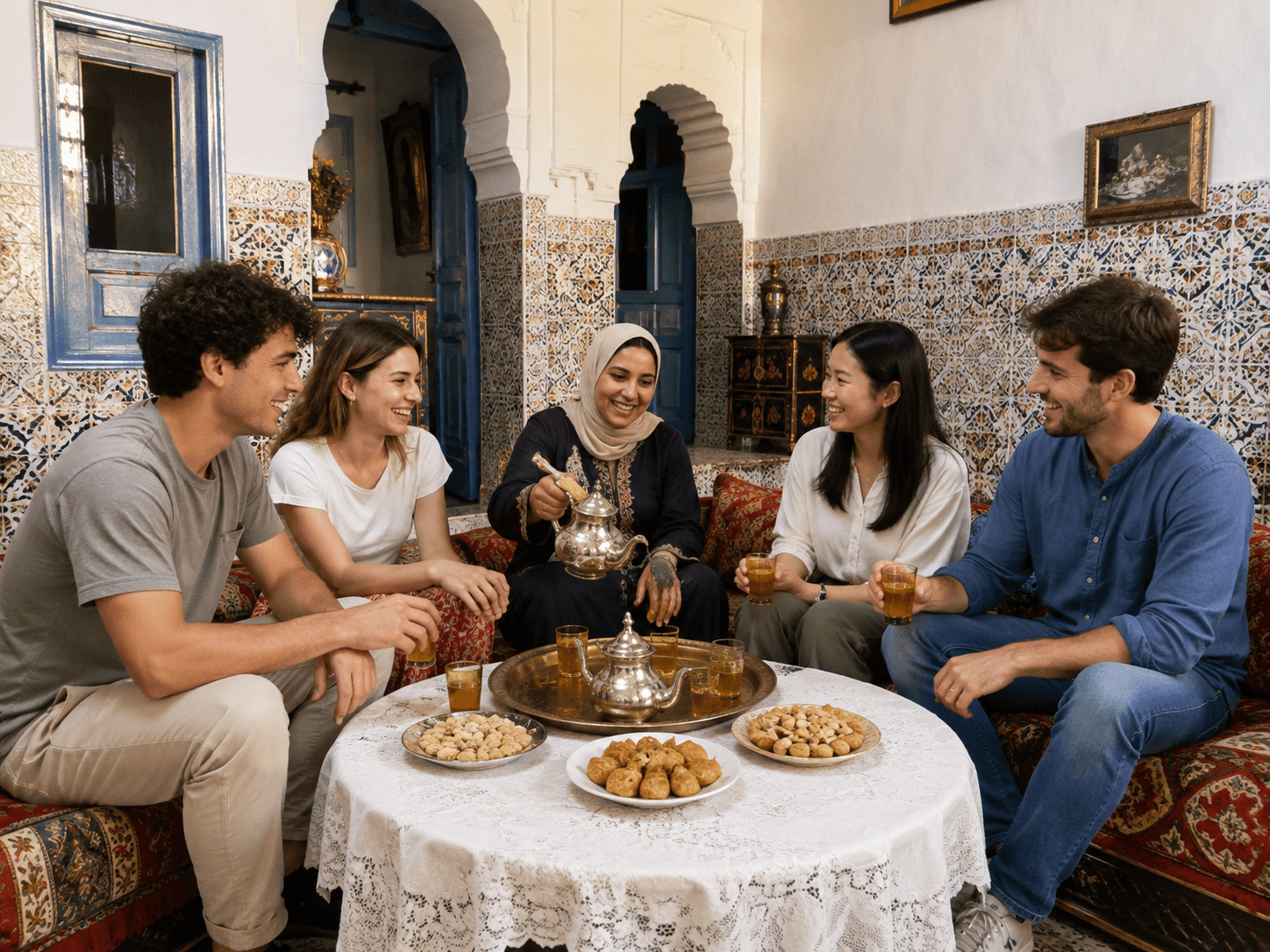
Host family
$155 / week · 1,450 MADYour own room in a Moroccan home, with breakfast and dinner shared with the family. A simple way to experience daily life and practice Arabic beyond class.
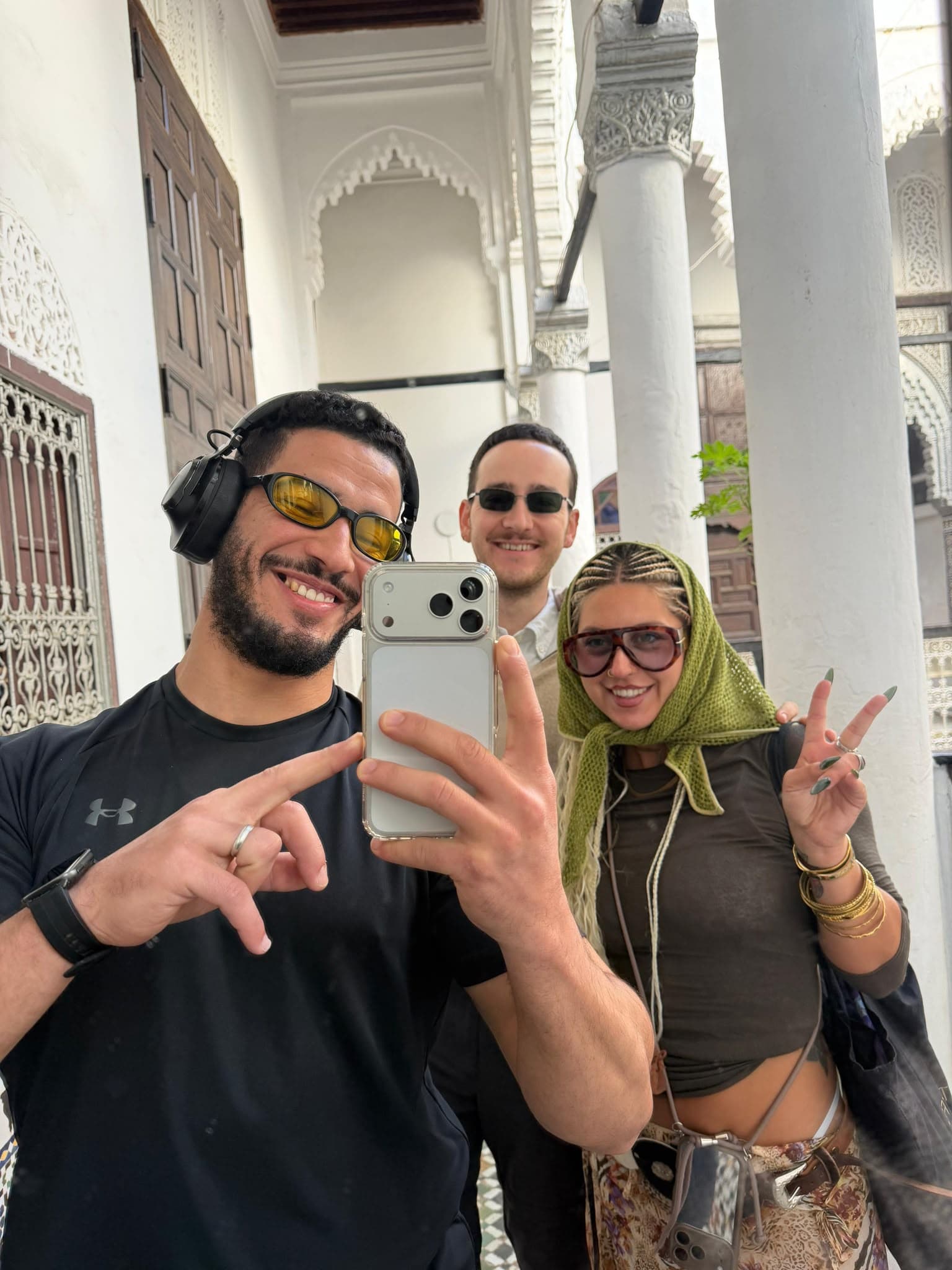
Student accommodation
$175 / week · 1,600 MADYour own room in a furnished flat or a riad in the medina, shared with other students, with water, electricity, and Wi-Fi included.
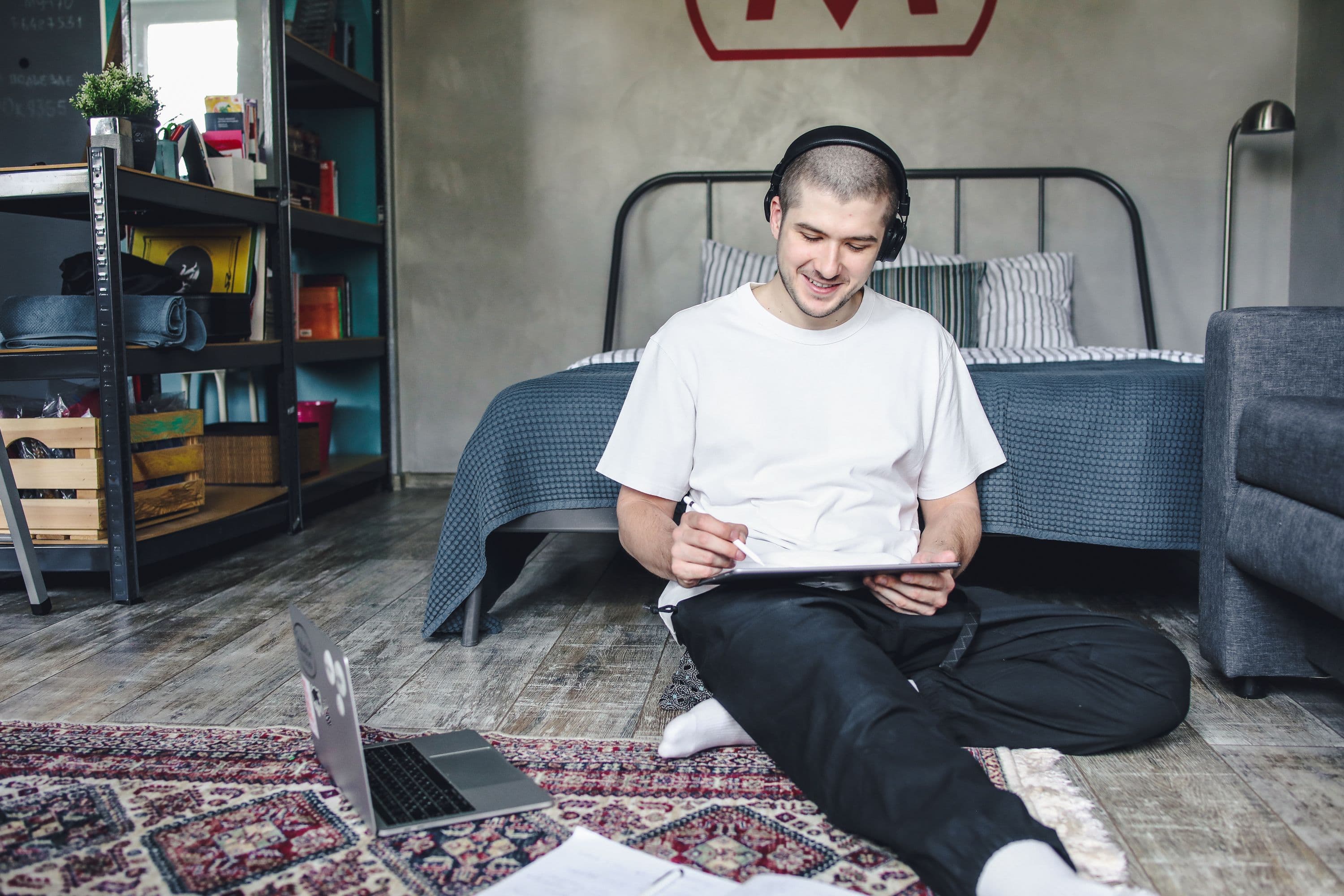
Studio
$315 / week · 2,900 MADA private, self-contained studio, ideal for students looking for complete privacy. Studios are limited in Rabat, so early requests are recommended.
For practical information on what to pack, SIM cards, money, and your first Monday, see Before You Arrive.
The cultural program
Each week, we publish a program of activities on Monday, with at least one free activity included.
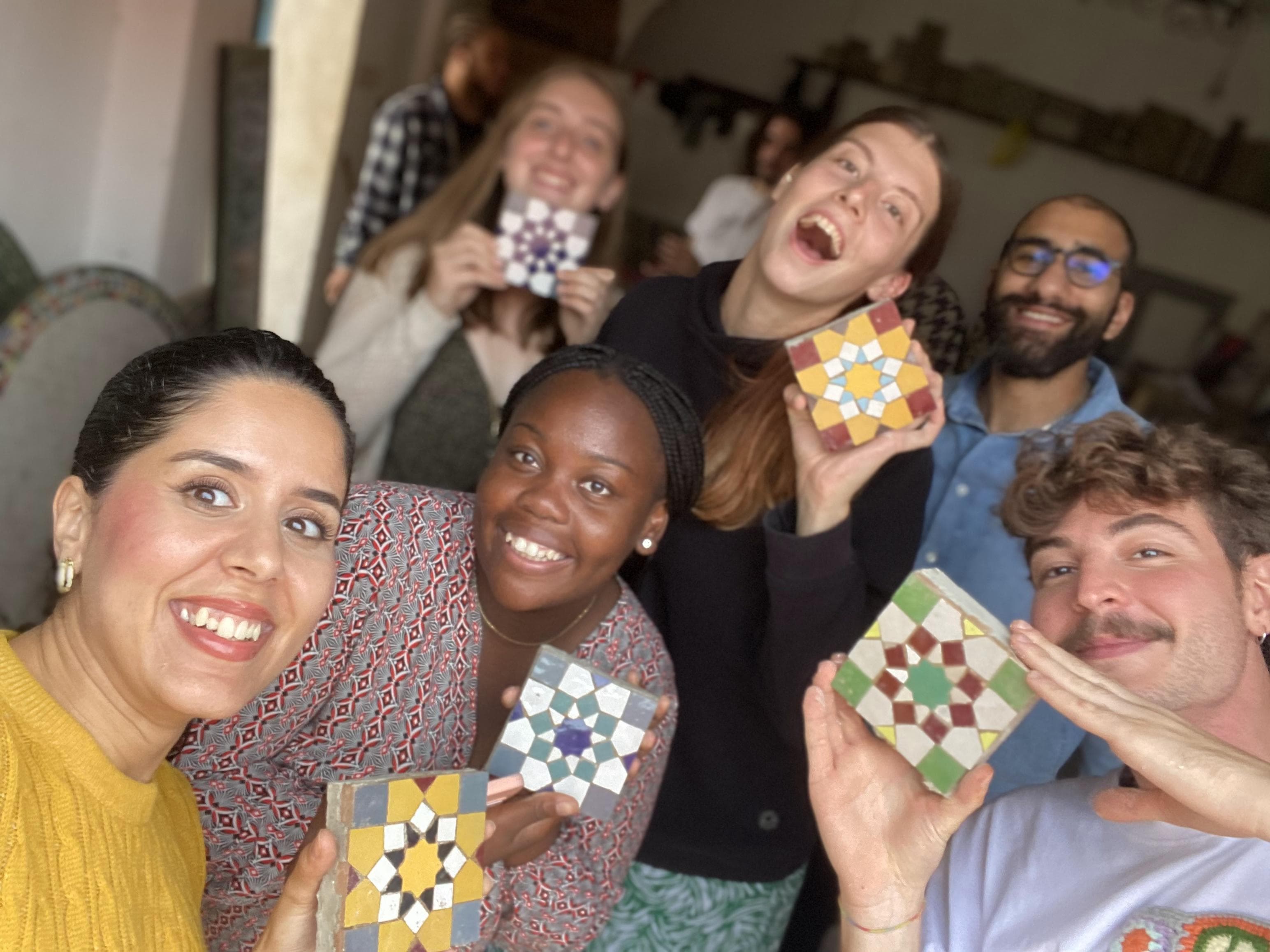
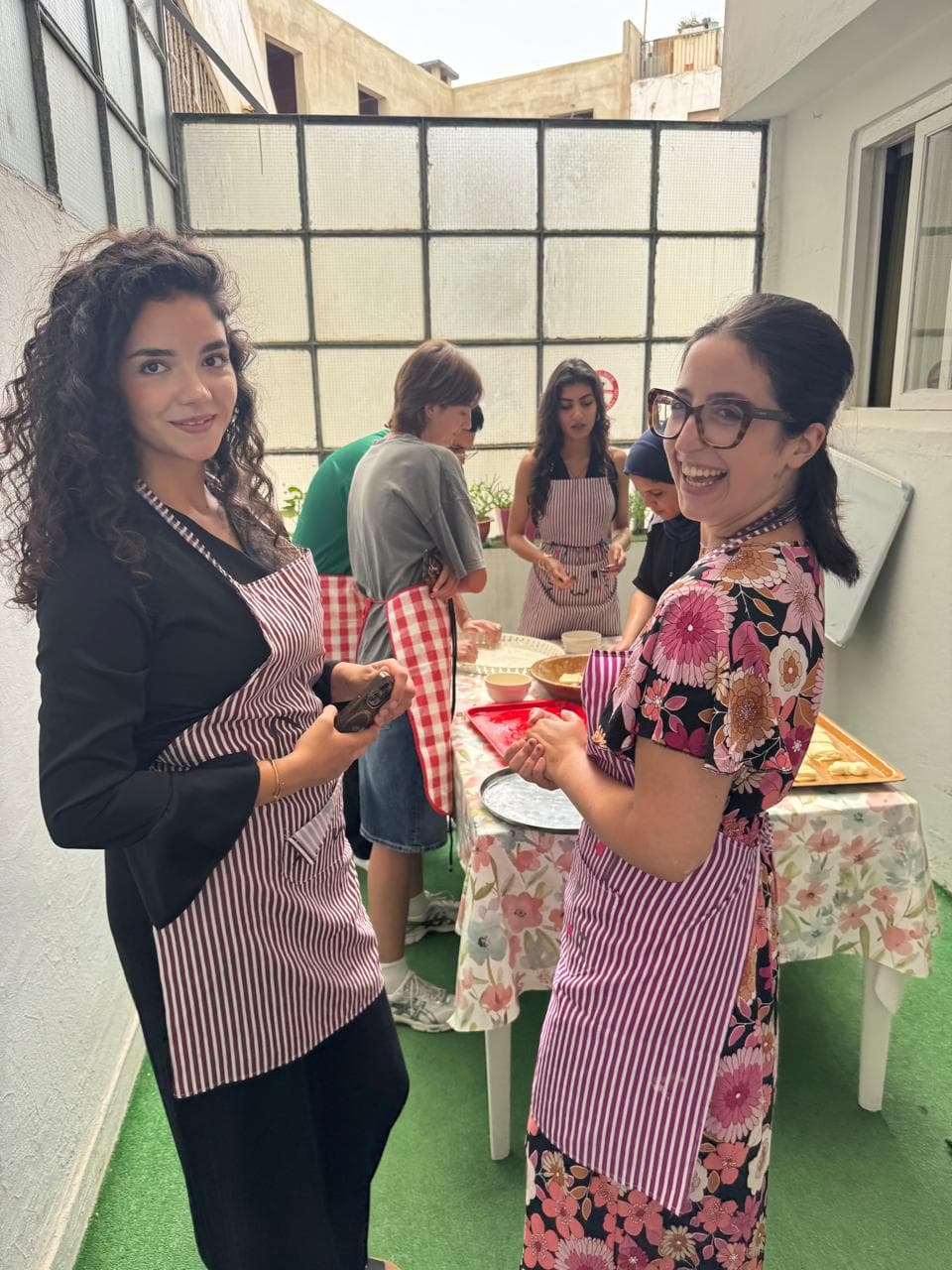
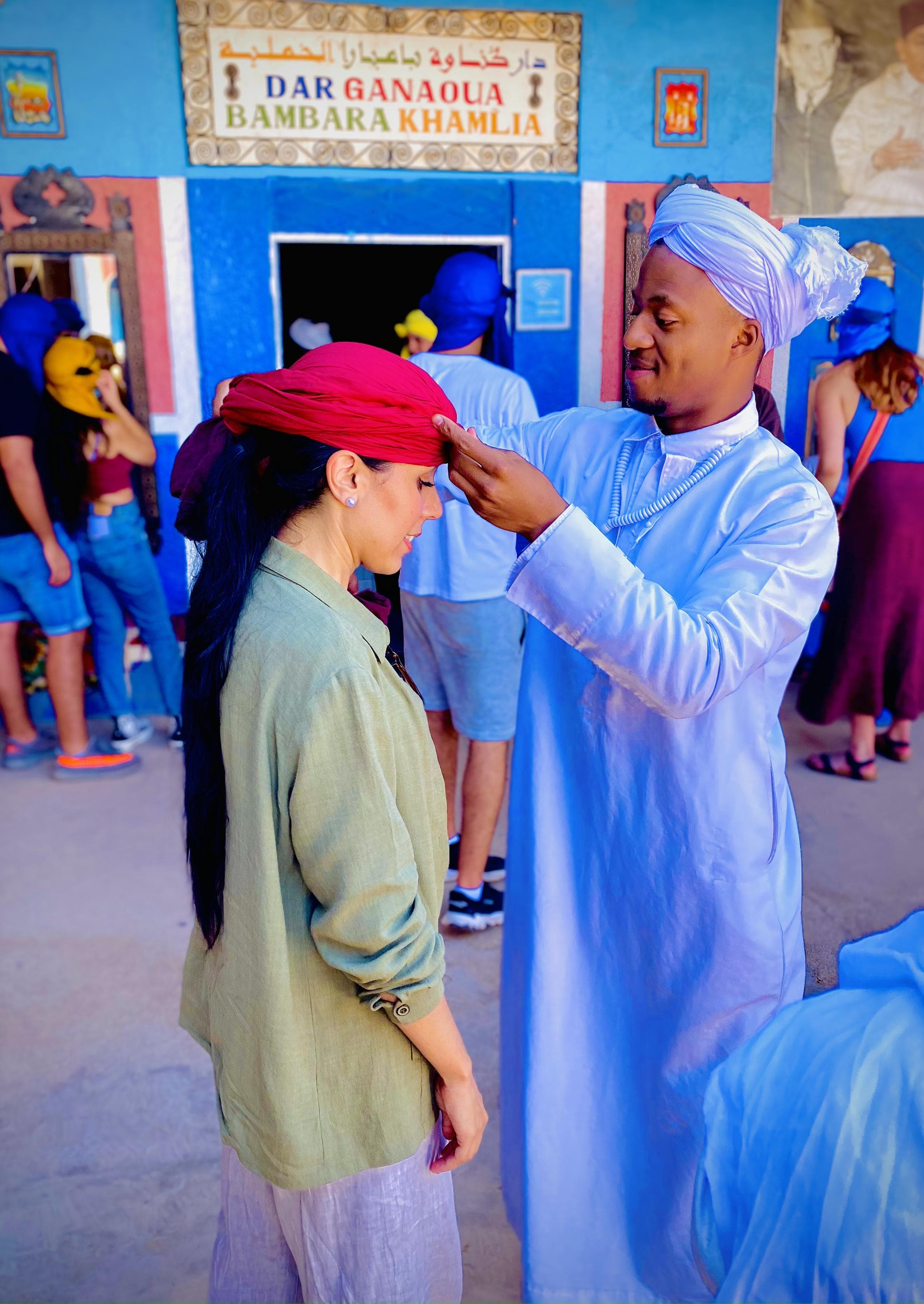
Cooking, with a Moroccan meal prepared from scratch and shared together. Calligraphy, using the reed pen and ink to explore Arabic as an art form. Zellige, pottery, discussion groups, museum visits, and walks through the medina and kasbah.
Workshops at the institute are included for all students. Excursions involving transport or entrance fees are charged separately. For Semester and Academic Year students, the weekly activity program is included in the package.
These activities are also opportunities to practice Arabic in real situations, alongside teachers and other students.
Your language partner
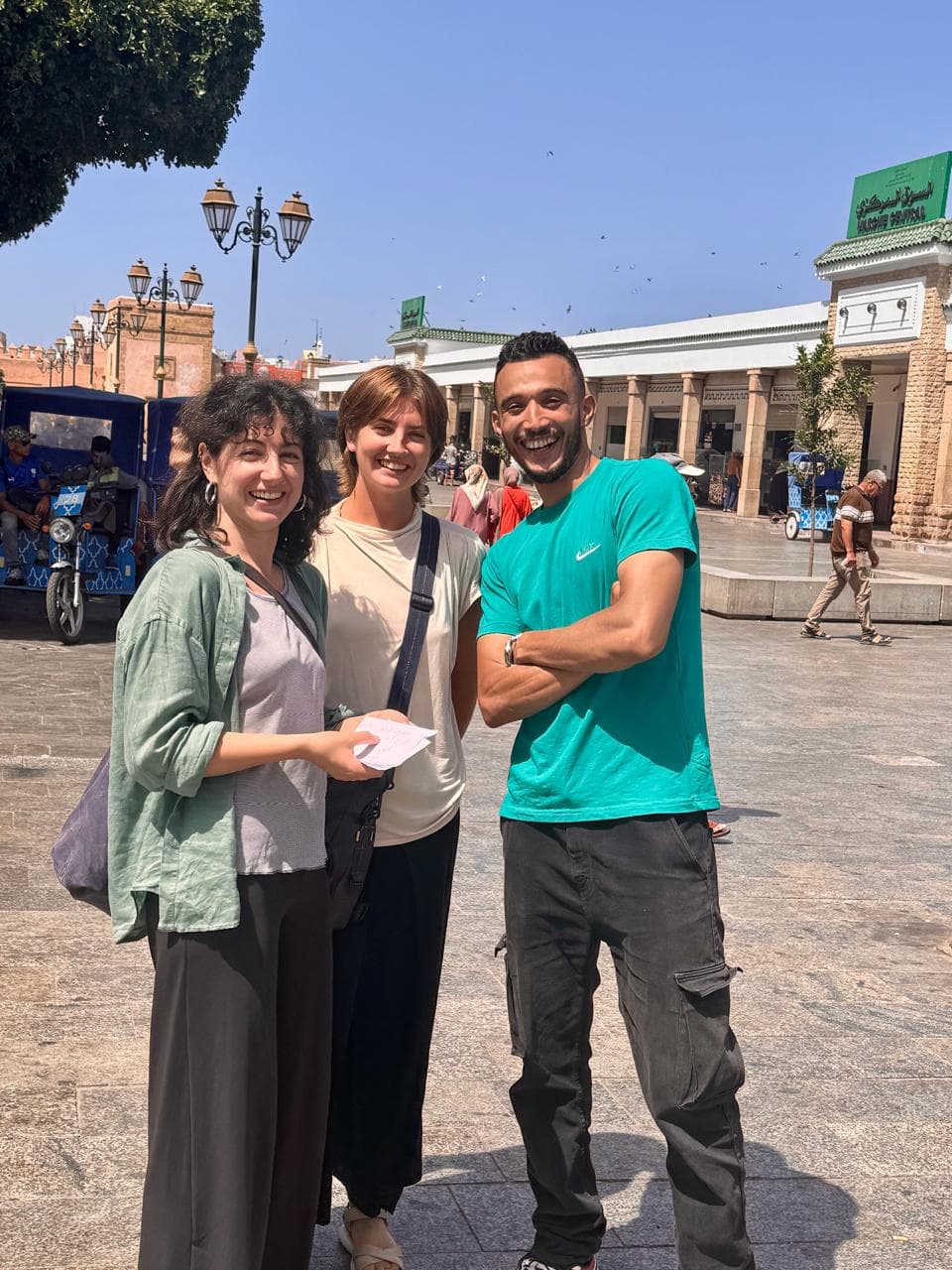
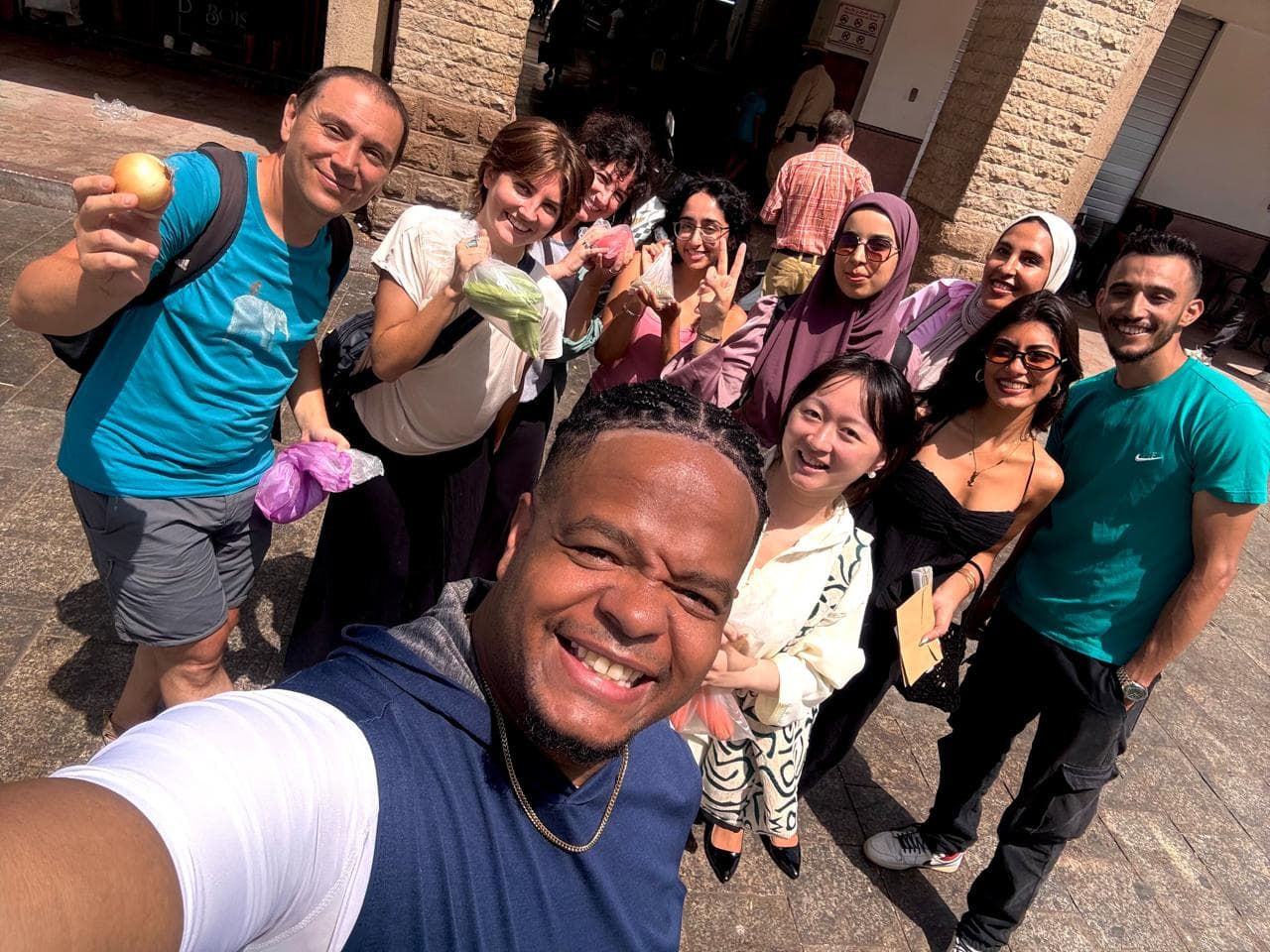
Twice a week, you meet with a Moroccan university student for guided conversation in Arabic.
These sessions provide regular opportunities to practice Arabic in natural conversations, discuss everyday topics, and engage with Moroccan culture beyond the classroom. Over time, the language becomes part of your own daily interactions, and these meetings can also lead to lasting friendships.
Language partner sessions are included in our programs.
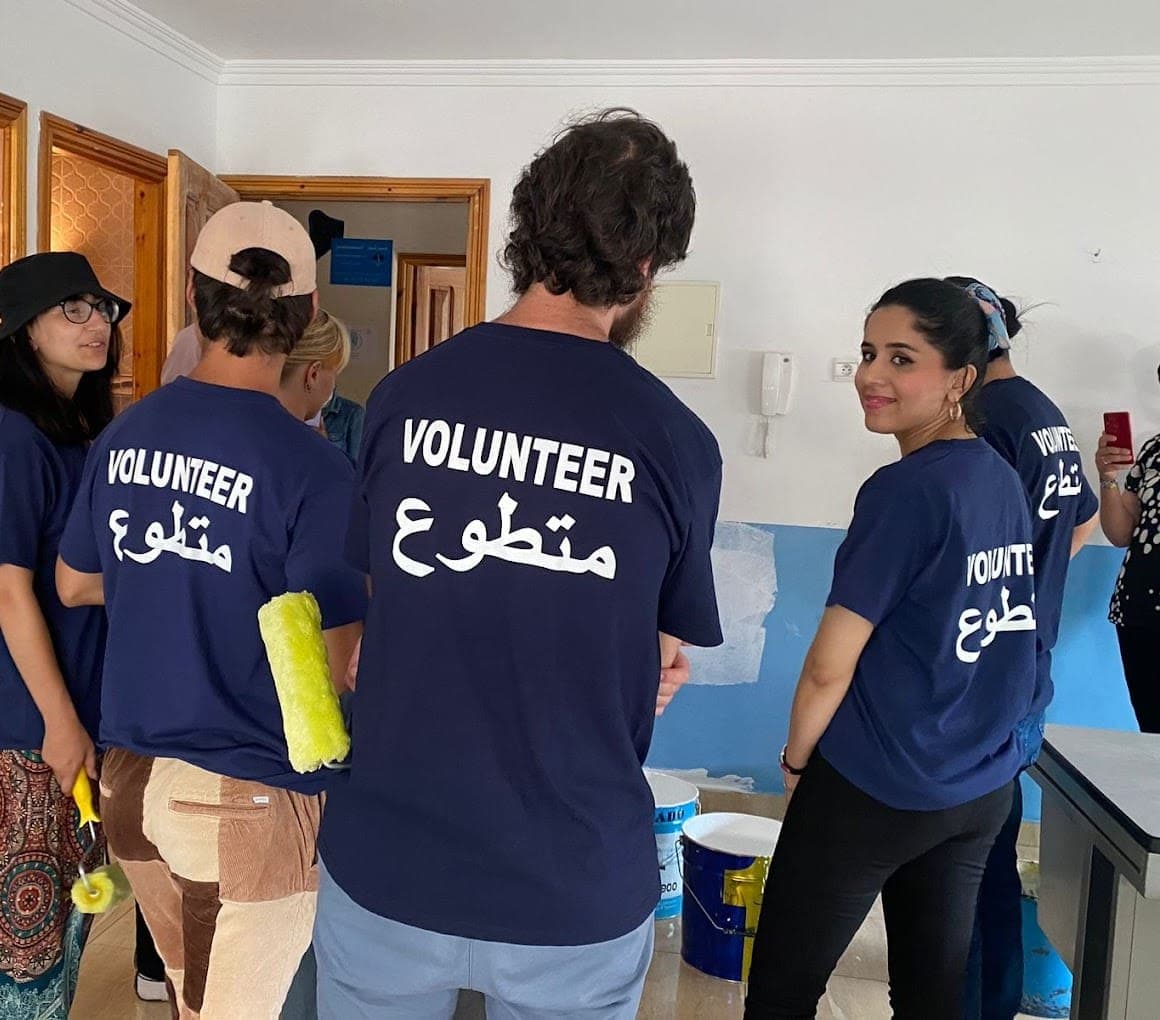
Internships and volunteering
For students who want to engage with Morocco beyond their studies.
We arrange placements with associations and organizations according to students’ interests, background, and level, subject to availability and host approval. Opportunities may include education, community work, social projects, and other fields depending on the needs of our partners.
Students who complete a placement receive a certificate and a personal reference documenting their work.
For Academic Year students, the four-week winter intersession can be used for an internship, field study project, or volunteer placement.
Trips and excursions
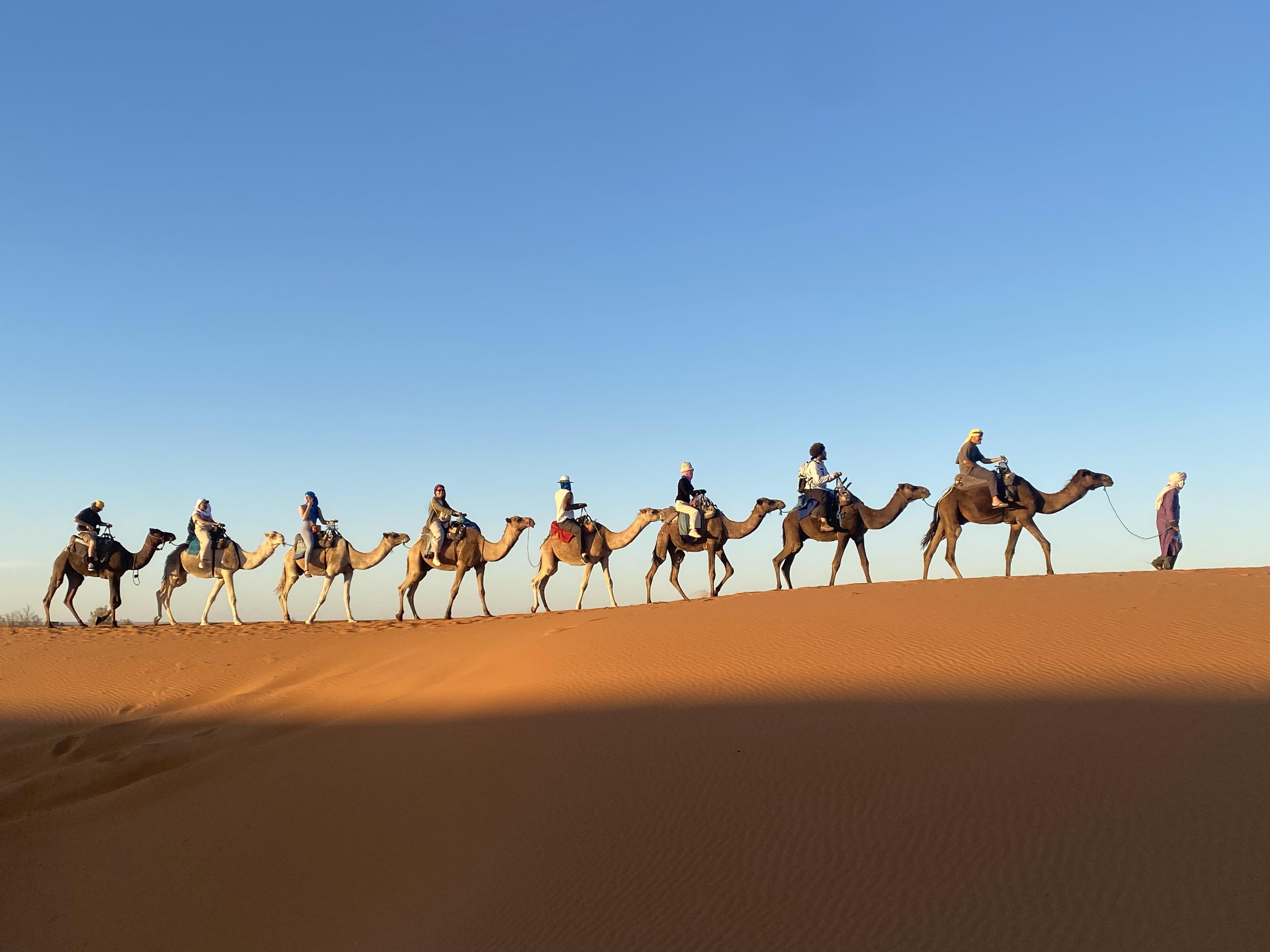
Every week, explore Rabat and its surroundings, including the Kasbah of the Udayas, Chellah, Hassan Tower, museums, and the medina, with opportunities to discover these places while practicing Arabic.
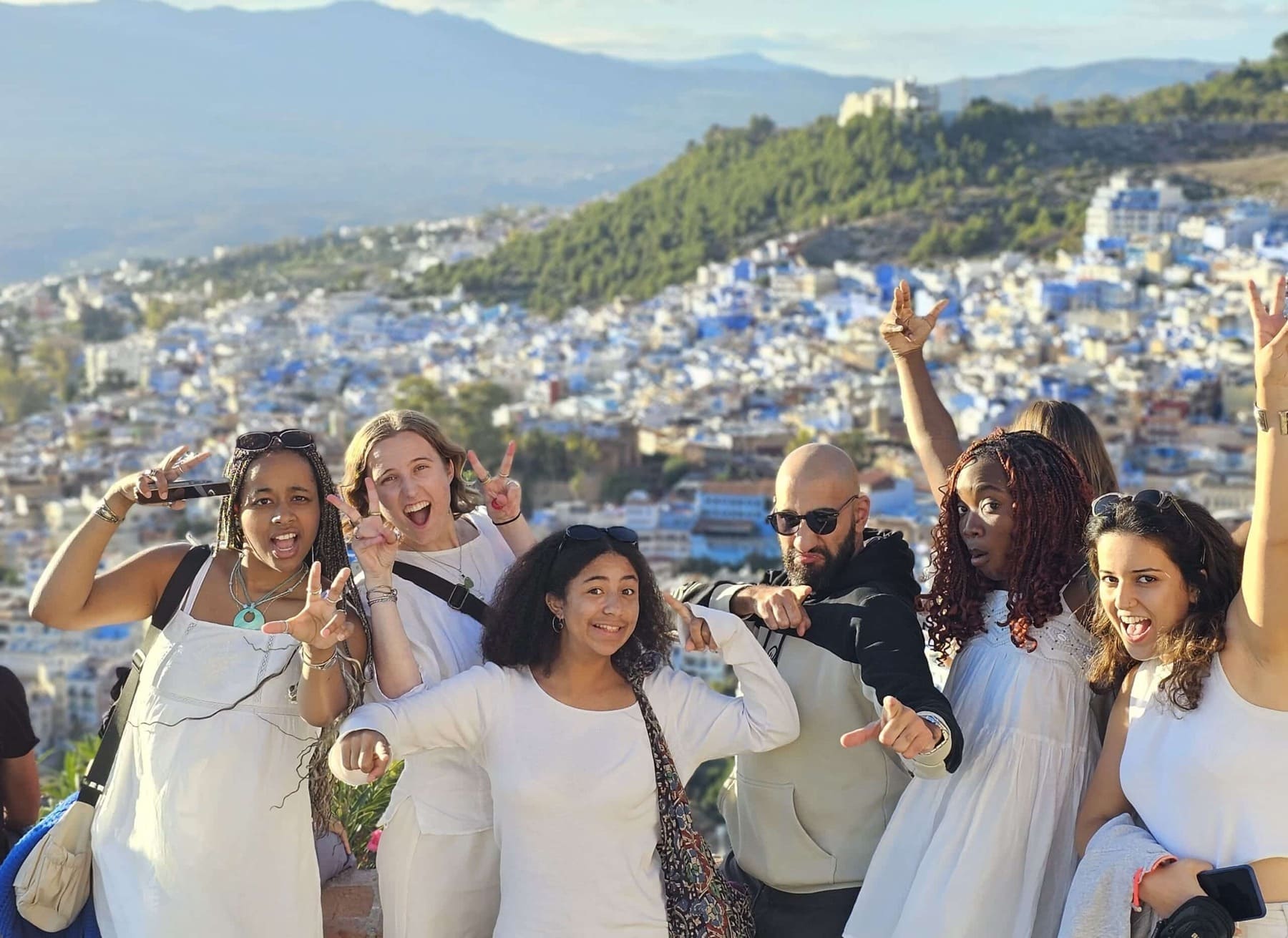
On weekends, trips take you further across Morocco, from Chefchaouen and Tangier to Fès, Meknès, Marrakech, and the Sahara. Each region brings its own language and culture, giving you the opportunity to hear different forms of Darija and use Arabic in new contexts.
Before you arrive
Everything before your first Monday
Papers
Passport. Valid for at least six months beyond your stay: the standard rule, worth checking today rather than at the airport.
Visa. Citizens of many countries, including the United States, the United Kingdom, the European Union and Canada, enter Morocco without a visa for stays of up to 90 days. Check the current rules for your nationality with a Moroccan consulate before booking, and if you need an enrollment letter for a visa application or for the border, we issue one: just ask.
Staying longer than 90 days? Academic Year students, this means you. There are established ways to handle it, and we walk every long-stay student through the options personally after enrollment. This is one of those things better done with us than read about online.
Getting here
Fly into Rabat–Salé (RBA), small, calm, twenty minutes from the institute, or Casablanca Mohammed V (CMN), the big international hub about an hour and a half away. Most long-haul routes land in Casablanca.
Book our airport transfer and a driver is waiting with your name when you land, from either airport, priced in the Extras of every course page. Prefer the train from Casablanca airport? Entirely doable, and we'll send you the how-to.
Arrive the weekend before your Monday start. It gives you a day to land properly: unpack, walk the neighborhood, sleep, before your placement interview and first class.
Your accommodation is confirmed before you fly, with the address and your host's or building's details in hand. Nobody lands here wondering where they're sleeping tonight.
Money
Dirhams are easy to get once you're here. ATMs are everywhere in Rabat and work with international cards; withdraw what you need as you go. Exchange offices in the city center and at both airports will change cash if you prefer.
Cards are accepted in supermarkets, restaurants and larger shops. The medina, taxis and small cafés run on cash: keep some small notes on you.
Package and program prices are on Dates & Fees; each course page lists its own rates, with the extras priced right there.
Phone
Buy a local SIM in your first days: they're cheap, prepaid, and sold at the airport and in every neighborhood; bring your passport to register it. The three networks (Maroc Telecom, Orange, inwi) all cover Rabat well, and a month of generous data costs less than a single day of roaming abroad.
Once you have a number, give it to us: it's how we reach you quickly if anything changes.
What to pack
Plugs: Morocco runs on 220V with European two-pin sockets (types C and E). One universal adapter covers you.
Clothes: lighter than you think for most of the year, plus one properly warm layer. Rabat winters are mild outdoors and surprisingly cool indoors, because buildings here aren't built for heating. Everyday dress in Rabat is relaxed and varied; comfortable, reasonably modest street clothes and you'll never think about it again.
Otherwise: any prescription medication in its packaging, and honestly little else. Rabat is a capital city. Pharmacies are excellent and everywhere, and anything you forget can be bought within a tram ride.
Your textbook is waiting for you here: no need to hunt for it at home.
Your first Monday
Come in for the morning we tell you in your arrival email. Here's what it looks like:
If you haven't done your spoken placement online, you do it now: a short conversation, nothing to prepare. You meet the team, you see the building, you get your schedule and your book, and then you do the thing you came for: you go to class.
By lunchtime you'll have spoken more Arabic than most people manage in a month at home. That's the plan working.
And after that: stuck, lost, unwell, homesick, or just hunting the good fish restaurant, you have our numbers, and not only between nine and five. That's what we're for.
Contact Us
Whether it is about our courses and programs, accommodation, enrollment, or something else entirely, send us a message and we get back to you.
Address
Appt N°5, Imm N°106, Avenue Allal Ben Abdellah, Rabat 10000, Morocco
WhatsApp
+212 649 65 54 10